

A stiff first step in the morning, knees that complain after a long walk, or shoulders that feel slower to recover after training can make joint health feel suddenly urgent. So, is collagen good for joints? For many people, it can be a worthwhile part of a joint-support routine, particularly when it is taken consistently alongside strength training, adequate protein and sensible load management. But collagen is not a miracle fix, and the type, dose and reason you are taking it all matter.
Is collagen good for joints? The evidence-led answer
Collagen is the main structural protein in connective tissues throughout the body, including cartilage, tendons, ligaments, skin and bone. Joint cartilage contains a high proportion of type II collagen, while types I and III are abundant in tendons, ligaments and bone. As we age, train hard, carry extra load, move through menopause or recover from injury, the balance between tissue breakdown and repair can become less favourable.
Supplemental collagen peptides are broken down during digestion into amino acids and small peptides. These provide building blocks such as glycine, proline and hydroxyproline, which are especially prevalent in collagen-rich tissues. Research suggests these peptides may also signal cells involved in connective tissue maintenance to produce more collagen and other components of the extracellular matrix.
That does not mean a scoop of collagen directly rebuilds a worn joint. It means that, over time, collagen may help support the conditions in which connective tissue is maintained. Clinical studies on hydrolysed collagen peptides have found modest improvements in joint comfort and function for some active adults and people with osteoarthritis. Results vary, but the overall picture is promising enough to make collagen a practical nutritional tool rather than a passing wellness trend.
Where collagen can make the biggest difference
Collagen tends to be most useful when the goal is ongoing support, not instant relief. Active people may use it to support tendons and ligaments exposed to regular running, lifting, court sport or physically demanding work. Adults noticing age-related joint niggles may use it as part of a wider strategy to stay mobile and comfortable. It can also be a useful protein addition during periods of recovery when appetite, routine or food intake has been disrupted.
The effect is usually subtle and cumulative. You may notice that joints feel less cranky after activity, that recovery feels more manageable, or that you are better able to maintain the exercise habits that protect long-term mobility. These are meaningful outcomes, even if they are not dramatic overnight changes.
Collagen is not a replacement for assessment when pain is sharp, persistent, swollen, unstable or linked to a new injury. It also cannot correct every cause of joint pain. Arthritis, tendon injury, inflammatory disease, poor movement mechanics and training errors need different levels of care. A premium supplement should support smart health decisions, never delay them.
Collagen peptides versus type II collagen
Not all collagen formats work in exactly the same way. Hydrolysed collagen peptides are the most familiar option. They are designed to dissolve easily into hot or cold drinks, soups and meals, making them ideal for daily use. Most research on collagen peptides for joint comfort uses approximately 5 to 15 grams daily, commonly for at least eight to 12 weeks.
Undenatured type II collagen is different. It is typically taken in much smaller amounts and is thought to work through immune-related mechanisms that may help the body’s response to its own joint collagen. It has research in osteoarthritis and exercise-related joint discomfort, but it is not interchangeable with collagen peptides gram for gram.
A multi-collagen formula can be a convenient choice for people looking for broader connective-tissue support, particularly where joints, training recovery, skin and everyday protein intake are all priorities. The key is not chasing a lengthy ingredient list. It is choosing a format you will genuinely take every day.
How to use collagen for joint support
Consistency beats occasional mega-doses. A daily collagen peptide routine is generally more useful than taking it only after a punishing gym session or when your knees start complaining. Give it a fair trial of 8 to 12 weeks before judging whether it earns a permanent place in your routine.
For people training regularly, taking collagen around 30 to 60 minutes before a planned resistance, rehabilitation or impact session may be useful. The theory is that providing collagen-rich amino acids before loading connective tissue could support its normal remodelling response. The research is still developing, so treat timing as a helpful refinement rather than a rule that makes or breaks results.
Vitamin C also plays an essential role in the body’s natural collagen synthesis. You do not need an elaborate protocol. Pairing your collagen with fruit, vegetables or a balanced meal is an easy, food-first approach. Think collagen in a morning tea with berries on the side, or added to a nourishing soup alongside vegetables and a protein-rich meal.
A practical routine may look different depending on your lifestyle:
- An active adult may take collagen before a strength or rehabilitation session, then prioritise progressive training and enough total protein.
- Someone with everyday stiffness may build it into a morning coffee, tea or smoothie, while working on regular walking and lower-body strength.
- During recovery or low appetite, a warm collagen beverage or high-protein bone broth can be an easy way to add functional nutrition without another heavy meal.
- During menopause, when changes in muscle, bone and connective tissue can affect comfort and confidence in movement, collagen can complement resistance training and a protein-forward eating pattern.
Bone broth and collagen: useful, but not identical
A slow-simmered grass-fed bone broth can be a deeply satisfying way to bring collagen-containing nutrition into the day. It offers warmth, flavour and a ritual that is easy to sustain - particularly for busy professionals, people fasting with professional guidance, or anyone wanting a savoury alternative to sweet shakes.
However, collagen content in traditional liquid bone broth can vary widely based on the bones, simmering method and serving size. If you are targeting a specific research-aligned collagen dose, a clearly labelled collagen peptide powder gives greater certainty. Bone broth and collagen peptides can work beautifully together: one for nourishing enjoyment and convenient savoury protein, the other for more precise daily collagen intake.
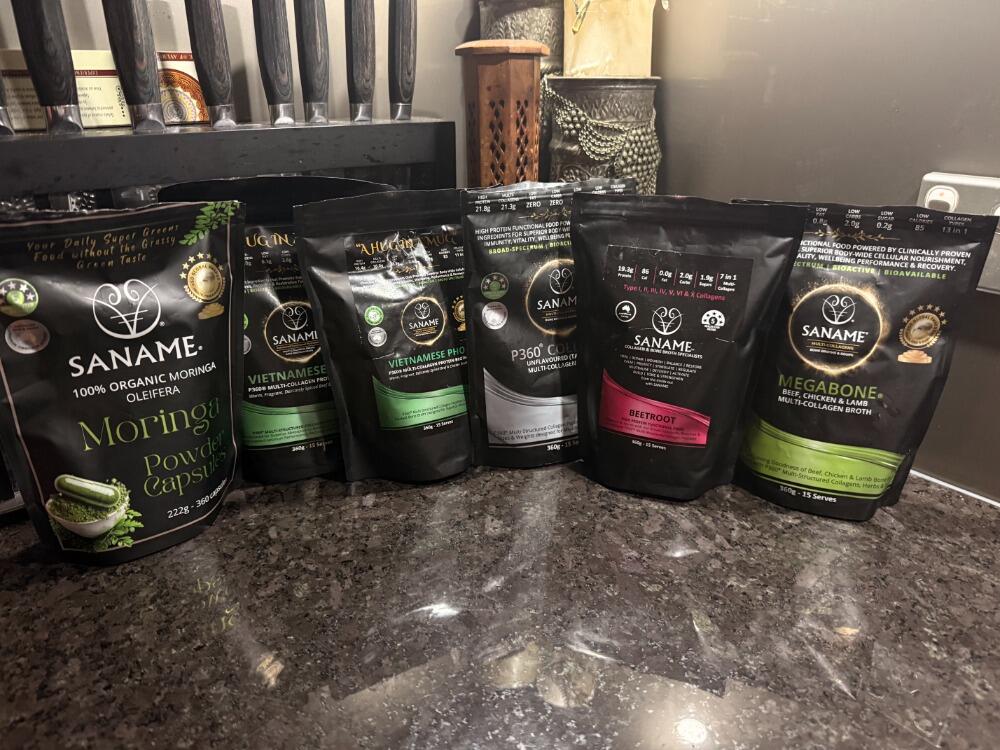
This is where functional food matters. SANAME brings premium Australian grass-fed bone broth and multi-collagen nutrition into everyday rituals that feel less like a clinical chore and more like a genuine Hug in a Mug.
What collagen cannot do on its own
Joint health is built by what you do repeatedly. Collagen cannot outwork poor sleep, chronic under-fuelling, an abrupt increase in training volume or a sedentary week followed by an all-out weekend. It also should not be your only protein source. Collagen is not a complete protein because it is low in certain essential amino acids, including tryptophan.
For muscle repair and strength, include complete protein sources across your day, such as eggs, fish, dairy if tolerated, meat, soy, legumes or a quality complete protein powder. Then use collagen strategically to add its distinctive amino acid profile. This is especially relevant for adults over 40, active women, and anyone trying to preserve muscle while managing body composition or reduced appetite.
The foundations still matter: progressive resistance exercise, appropriate aerobic activity, body weight management where relevant, sufficient sleep, and adequate calcium and vitamin D for bone health. If a joint is painful, a physiotherapist or qualified health professional can help identify the right loading plan. Movement is often medicine, but the dose must suit the joint in front of you.
Choosing a collagen worth taking daily
Look for a clearly disclosed collagen amount rather than vague claims about a proprietary blend. Choose a flavour and format that suit your real routine: iced in summer, warm in winter, blended into breakfast or stirred into a savoury meal. For people with dietary sensitivities, checking allergen information and ingredient quality is essential.
If you are pregnant, breastfeeding, managing kidney disease, have a medical condition, or are preparing for surgery, speak with your healthcare professional before starting any new supplement. People with fish, egg, shellfish or bovine allergies should take particular care to check the collagen source.
Joint support rarely comes from one heroic decision. It comes from a daily pattern: move well, eat enough, build strength and choose nutrition that makes consistency enjoyable. Collagen can be a valuable part of that pattern - one simple serve at a time.